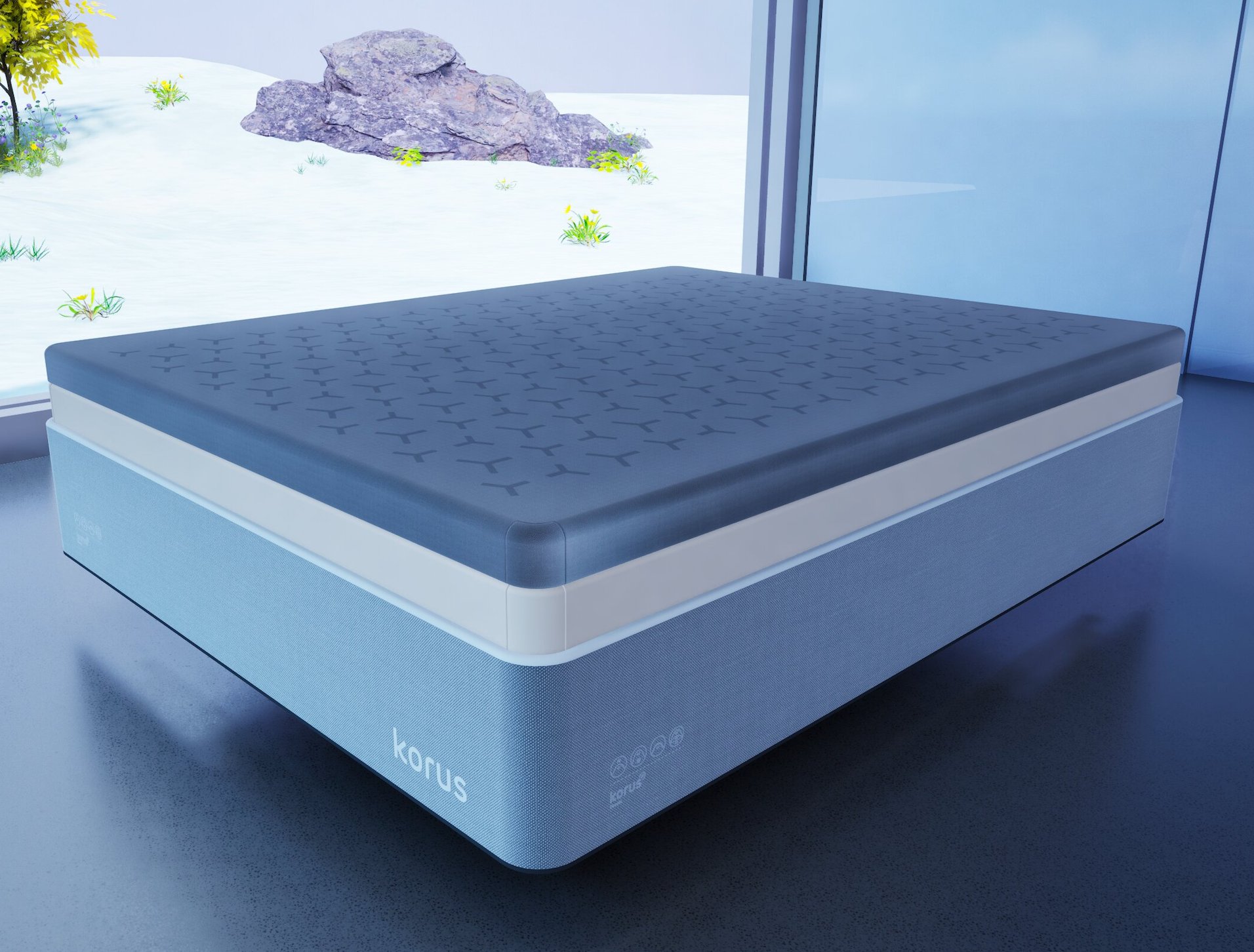
In development · DME pathway · Piloting 2027

Korus Care · For Institutions

Autonomous repositioning for every bed, every night.

Korus reduces the manual repositioning burden on your staff, documents every movement automatically, and protects residents when teams are stretched thin — across senior living, skilled nursing, and rehab.

Korus Care for Institutions demo

See Korus Care for Institutions work

The Problem in the Facility

Two separate risks live in the same bed.

Immobility and bed exits are different problems, with different causes and different consequences. Most beds address neither — Korus is built for both.

Immobility → Pressure Injuries

The 2-hour turn that gets missed

Residents who can't reposition themselves must be turned every two hours to keep pressure off the skin. On understaffed, overnight shifts that protocol is routinely missed — and pressure injuries develop, with staff back injuries from manual lifting close behind.

$26.8B

Annual US cost of pressure injuries in care settings

1 in 3

Nursing staff injuries from manual patient handling

Mobility → Bed Exits & Falls

The exit that becomes a fall

Residents who can move — but shouldn't without assistance — are the ones who fall. Traditional rails create entrapment risks. Bed alarms alert after the exit has already happened. Korus recognizes when someone is approaching the edge and responds before the fall occurs.

$50B+

Annual US cost of fall-related injuries in older adults

800K

Hospitalizations per year from in-facility falls

How It Works

Repositioning that runs itself —
and proves it did.

The same Korus platform, tuned for the facility, addresses both risks: it repositions residents to keep pressure off the skin, and it recognizes when someone reaches the edge of the bed — raising a soft "railing" and alerting staff before an exit becomes a fall — logging every event for compliance.

Autonomous Repositioning · Pressure Injuries

Every bed, every turn, on schedule

Pressure-triggered, clinically-scheduled repositioning across the facility. Every turn is logged with a timestamp, resident ID, and position — creating an automatic compliance record without any manual documentation.

Edge Detection · Falls

Soft barrier before the exit happens

When a resident moves toward the edge, Korus inflates a gentle bolster and sends a real-time alert to staff — before the exit becomes a fall. No hard rails. No entrapment risk. No alarm that fires after the fact.

Staff Dashboard

Fleet view across every room

Real-time position status, repositioning history, and alert queue for every bed on the floor — from a single dashboard, on any device. Staff can trigger or override repositioning remotely at any time.

Compliance Logging

Every turn, timestamped automatically

Korus generates a continuous, auditable repositioning log — eliminating the documentation burden and providing defensible records for surveys, audits, and quality reporting.

What the Facility Gets

Built for the realities
of the floor.

Scheduled autonomous repositioning across the facility
Caregiver dashboard with real-time status and alerts
Institutional compliance logs — every turn timestamped
Edge-of-bed detection with soft, inflatable "railings"
Bed-exit and fall alerts
Assisted, supported get-in / get-out of bed
Anti-shear, gentle transitions to protect skin integrity
Fleet view across rooms and units

The ROI

Fewer injuries. Less turnover.
Cleaner audits.

Estimate the annual savings Korus can deliver for your facility. Even capturing 30–50% of these savings justifies deployment on labor alone.

Total beds in your facility

Drag the slider or type your bed count. All figures are estimated annual savings and are illustrative.

$200,000 – $430,000 / yr

Repositioning labor returned to staff
Hours back to the floor every shift

$50,000 – $100,000 / yr

Pressure injuries avoided
Consistent, documented repositioning

$25,000 – $80,000 / yr

Staff injuries reduced
Fewer manual lifts and transfers

Estimated total annual savings

$275,000 – $610,000 / yr
Book a Pilot →

Validated

Four years of US government capital have
already de-risked the technology.

$3.7M

Non-dilutive funding (NIH SBIR Ph1 + Ph2, Epilepsy Foundation)

96.5%

Edge-AI position-recognition accuracy (pilots at BWH + Soterya Lab)

<30s

Full autonomous reposition; smart cells lift 38cm / 450kg capacity

US/EU/UK/AUS

Core patent granted; co-owned with Brigham and Women's Hospital

The Technology

Integrated sensing, AI, and actuation —
in one platform.

Korus is a closed-loop, embodied-AI system: it senses each resident, decides, and acts, all on-device. The same intelligence powers every Korus tier.

Sensing

64-zone body mapping

Embedded pressure and motion sensors track every resident in real time.

Intelligence

On-device AI

Edge ML models recognize position, detect unsafe states, and schedule repositioning — locally, with full privacy.

Actuation

Silent pneumatic cells

Smart cells reposition smoothly and quietly — without waking the resident.

Distributor-Led

Bring Korus to your network.

Korus Care goes to market through partners. We're signing regional DME and LTC distributors, GPO contracts, and clinical pilot sites across the US — and resellers for EU and GCC expansion.

Distributor & reseller agreements (US → EU → GCC)
GPO contracting and group purchasing
Clinical and institutional pilot sites
Earn on hardware and recurring software

Become a Korus Partner

Tell us about your network and territory and we'll follow up with terms.

The Platform

One platform. Three levels of care.

Low-acuity care

Korus Care
for Home

Independence and safety for people aging in place, and the families who care for them.

Explore Home →

Mid-acuity care

Korus Care
for Institutions
You are here

Autonomous repositioning for senior living, skilled nursing, and rehab facilities.

High-acuity care

Korus
Medical

Clinical-grade intervention for hospitals, ICU, and epilepsy units.

Explore Medical →

Get Started

Pilot Korus in your facility.

See the platform on your floor, with your staff. We'll scope a pilot and the ROI for your bed count.

DME designation in progress. Commercial availability subject to regulatory clearance; piloting 2027.